Oak Processionary Moth Removal & Control Guide
Oak processionary moth (OPM) has become an increasing concern across parts of Essex and the South East. While the species is best known for damaging oak trees, it can also pose serious health risks to people and animals due to the thousands of toxic hairs found on its caterpillars.
If you have spotted unusual caterpillars, silk nests, or signs of damage on oak trees, you may be wondering how to get rid of oak processionary moth and what steps can be taken to prevent an infestation from spreading.
At Essex Tree Brothers, our experienced arboricultural team regularly assists property owners, land managers, and commercial clients with tree health issues and pest management. With over 350 five star Google reviews, we are trusted across Essex for professional tree care and expert advice.
What Is Oak Processionary Moth?
Oak processionary moth is an invasive species whose caterpillars feed almost exclusively on oak trees. The caterpillars emerge during spring and can strip large amounts of foliage from affected trees, weakening them and making them more vulnerable to disease and environmental stress.
The name comes from the caterpillars’ unusual behaviour, as they travel in long nose to tail processions along branches and tree trunks.
One of the biggest concerns surrounding oak processionary moth is the presence of microscopic hairs that cover the caterpillars. These hairs contain an irritant protein that can cause skin rashes, eye irritation, breathing difficulties, and allergic reactions in both humans and animals.
Why Oak Processionary Moth Is a Risk to Health and Trees
Oak processionary moth infestations can affect both tree health and public safety.
Repeated feeding can weaken mature oak trees, reducing their ability to recover from drought, disease, and storm damage. In public spaces, schools, parks, housing developments, and commercial sites, the caterpillars’ toxic hairs can create a significant health risk for residents, visitors, and staff.
Because of these risks, infestations should be taken seriously and managed appropriately.
How to Get Rid of Oak Processionary Moth Safely
Many people search for information on how to get rid of oak processionary moth, but it is important to understand that this is not a pest that should be tackled without professional advice.
Attempting to remove nests or caterpillars yourself can release large numbers of toxic hairs into the air, increasing the risk of exposure.
Professional management options may include biological treatments, targeted pesticide applications, and the removal of nests by trained specialists using appropriate protective equipment.
The best course of action depends on factors such as the size of the infestation, the location of the tree, and the level of public access around the site.
If you suspect an infestation, avoid touching the caterpillars or nests and seek professional guidance as soon as possible. Further detail on government management zones and legal responsibilities can be found on the official guidance page for managing oak processionary moth in England.
Long Term Oak Processionary Moth Control
While removing an active infestation is important, long term management often focuses on controlling oak processionary moth populations before they become established.
Regular tree inspections play a key role in identifying early signs of activity. Monitoring oak trees during spring and summer can help detect caterpillars before significant damage occurs.
Property owners and land managers can also benefit from professional tree surveys, particularly where there are large numbers of mature oak trees on site.
Effective oak processionary moth control often involves early identification of caterpillar activity, monitoring known risk areas, professional nest removal where necessary, and ongoing inspections to prevent future outbreaks.
For commercial sites, housing developments, schools, and public spaces, proactive management can significantly reduce both safety risks and treatment costs.
Signs of Oak Processionary Moth Infestation
Recognising the signs of infestation early can make management much easier.
| Sign | What to Look For |
|---|---|
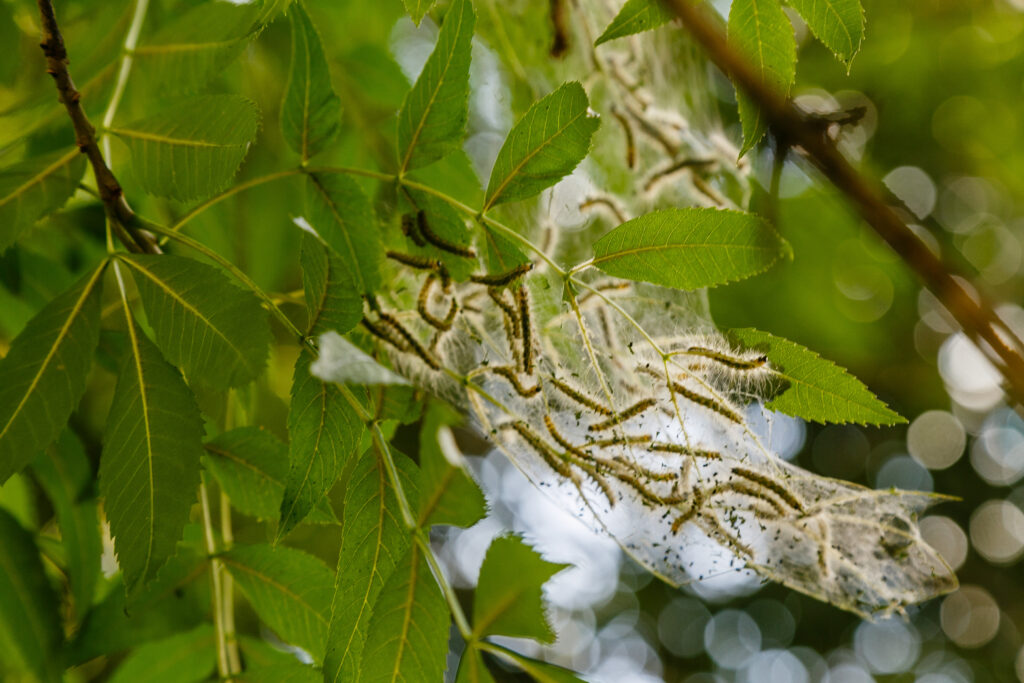
| Silk-like nests | Attached to oak trunks and branches, varying in size, often white or grey in colour |
| Caterpillar processions | Caterpillars seen moving in long, nose-to-tail processions along branches and trunks |
| Excessive leaf loss | Noticeable thinning or loss of foliage compared to surrounding healthy oak trees |
| Feeding damage | Visible damage throughout the tree canopy where caterpillars have been feeding |
If you notice any of these signs, it is advisable to arrange a professional inspection.
If you are unsure exactly what you are looking at, our oak processionary moth identification guide covers what the moth, caterpillars, and nests look like at each stage of the lifecycle.
Why Professional Inspection Matters
Healthy oak trees provide significant environmental and visual benefits, making it important to identify threats before serious damage occurs.
Professional arboricultural inspections can help assess tree health, identify pest issues, and recommend practical management solutions tailored to the specific site.
At Essex Tree Brothers, we provide tree inspections, tree surveys, and arboricultural advice across Essex. Our experienced team can assess oak trees for signs of oak processionary moth activity and help clients understand the most appropriate control measures.
What to Do If You Find Oak Processionary Moth
If you believe you have identified oak processionary moth caterpillars or nests on your property, do not attempt to remove them yourself.
Essex Tree Brothers can provide professional guidance, tree inspections, and expert arboricultural support to help protect both your trees and the people who use your site.
Contact our team today to discuss your concerns and arrange a professional assessment.